Understanding Section 9 and 11 Objections
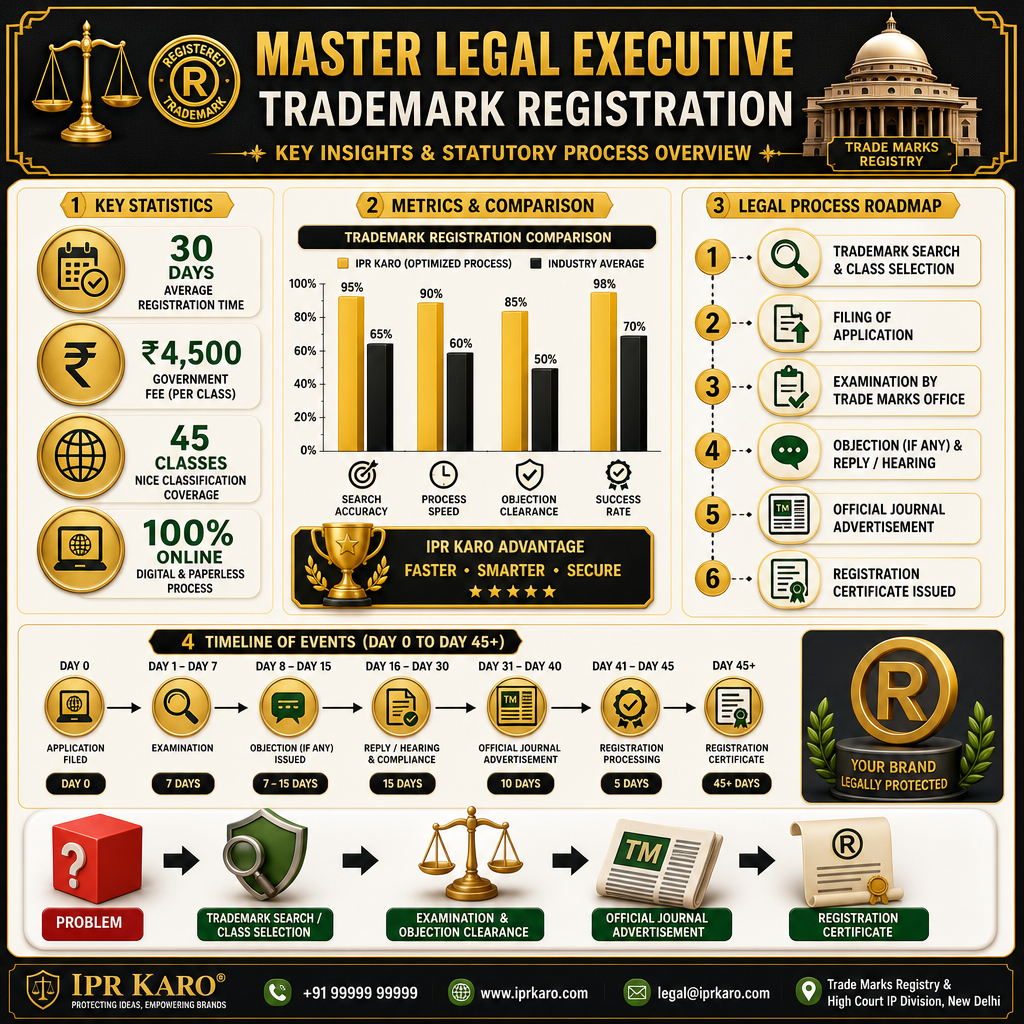
Trademark registration is a critical step for businesses seeking to protect their brand identity. However, during this process, applicants may encounter objections under Section 9 and Section 11 of the Trade Marks Act, 1999. Understanding these objections is crucial for effectively navigating the trademark registration landscape in India. This section provides an in-depth analysis of these statutory provisions and their implications.
Section 9 Objections: This section of the Trade Marks Act, 1999, deals with absolute grounds for refusal of registration. Primarily, it addresses marks that lack distinctiveness, marks that are descriptive of the goods or services, or marks that have become customary in the current language or in the bona fide and established practices of the trade. For instance, a mark that directly describes a product's characteristics or quality may face objections under Section 9. Overcoming these objections often requires demonstrating acquired distinctiveness or secondary meaning, which can be a challenging task.
Section 11 Objections: In contrast, Section 11 covers relative grounds for refusal. It raises objections when a proposed trademark is identical or confusingly similar to an existing registered trademark. This is to prevent any likelihood of confusion among the public or dilution of the earlier mark's distinctiveness. Engaging in a thorough AI Trademark Public Search Tool prior to filing can help mitigate the risk of Section 11 objections. Applicants must effectively argue that their mark would not cause confusion due to differences in goods or services, market channels, or target consumers.
To address these objections, applicants can utilize various forms and processes outlined in the Trade Marks Rules, 2017. For example, a detailed response to an objection can be filed using Form TM-O, accompanied by the requisite official fee of ₹4,500 for individuals/startups or ₹9,000 for companies. Leveraging expert Trademark Registration Services and consulting with an experienced Consult IP Attorney can significantly enhance the chances of a successful resolution.
Effective strategies for overcoming objections include providing additional evidence of usage, submitting affidavits to establish distinctiveness, and showcasing consumer recognition in the market. Engaging with IPR Karo Legal Advocates & Strategists ensures that applicants have access to comprehensive legal support and strategic guidance tailored to their specific needs. Understanding and addressing Section 9 and 11 objections is a fundamental step in securing robust trademark protection for your brand.
Common Reasons for Section 9 Objections
A trademark application in India may face objections under Section 9 of the Trade Marks Act, 1999, primarily concerning the distinctiveness of a mark. Section 9 outlines the absolute grounds for refusal of registration, aimed at preventing the registration of marks that lack distinctive character or are inherently generic. Understanding these objections is crucial for effectively responding to them. 1. Lack of Distinctiveness: A common reason for objection under Section 9(1)(a) is the lack of distinctiveness. A trademark must be capable of distinguishing the goods or services of one enterprise from those of others. Marks that are purely descriptive or have no inherent distinctiveness often face objections. For example, a mark that merely describes the quality, quantity, intended purpose, or geographical origin of the goods or services is likely to be objected to. 2. Descriptive Marks: Under Section 9(1)(b), marks that consist exclusively of signs or indications which may serve in trade to designate the kind, quality, quantity, intended purpose, values, geographical origin, or the time of production of the goods or rendering of services are not considered registrable. Such descriptive terms provide no distinctive character and are thus objectionable. 3. Generic Terms: Generic terms are not eligible for trademark protection. If a term is commonly used in the language or is a standard industry term, it may be objected to under Section 9(1)(c). These terms cannot function as trademarks because they do not identify and distinguish the source of goods or services.
Parameter | Section / Rule | Statutory Requirement | Legal Effect / Remedy |
|---|---|---|---|
Lack of Distinctiveness | Section 9(1)(a) | Marks must be able to distinguish goods/services | Provide evidence of acquired distinctiveness or secondary meaning |
Descriptive Marks | Section 9(1)(b) | Must not describe the goods/services | Argue distinctiveness or evidence of long-term use |
Generic Terms | Section 9(1)(c) | Terms common in the trade | Generally not registrable unless distinctiveness is proven |
4. Deceptive Marks: According to Section 9(2)(a), a mark may be objected to if it is likely to deceive or cause confusion among the public. This could happen when the mark misrepresents the nature, quality, or geographical origin of the goods or services. 5. Religious Sensitivities and Public Policy: Section 9(2)(b) and Section 9(2)(c) prevent the registration of marks that are contrary to public policy or accepted principles of morality, or those that hurt religious susceptibilities. Marks that contain scandalous or offensive material or symbols may face objections. To successfully address these objections, applicants can leverage IPR Karo's AI Trademark Public Search Tool for preliminary checks and our Trademark Registration Services for strategic guidance. For complex issues, it's advisable to Consult IP Attorney from the IPR Karo Legal Advocates & Strategists team who specialize in crafting robust responses to overcome such objections.
Common Reasons for Section 11 Objections
Section 11 of the Trade Marks Act, 1999, plays a critical role in ensuring that trademarks do not conflict with existing marks, thereby preventing confusion among consumers and protecting the proprietary rights of trademark owners. Here, we delve into the common reasons for objections under Section 11 and provide insights for Indian founders, enterprises, and legal practitioners. 1. Identical or Similar Marks: One primary ground for objection under Section 11(1) is the existence of identical or similar trademarks already registered or pending registration. The Registrar will assess whether the applied mark is likely to cause confusion with an existing mark based on visual, phonetic, and conceptual similarities. Utilizing the AI Trademark Public Search Tool can help identify potential conflicts before filing. 2. Well-Known Trademarks: Section 11(2) protects well-known trademarks irrespective of whether they are registered in India. If a trademark is considered well-known, any application that could dilute or tarnish the reputation of the well-known mark may be objected to. It is crucial to conduct thorough research using the Trademark Class Finder (Classes 1-45) to understand the classes affected by such well-known marks. 3. Honest Concurrent Use and Acquiescence: Even if a trademark is similar to an existing one, objections may be overcome by demonstrating honest concurrent use or that the proprietor of the earlier trademark has acquiesced in the use of the later mark as per Section 12. Evidence of long-standing, good-faith use can be compelling in these scenarios. 4. Prior Reputation and Use: Section 11(3) can be invoked if the trademark has acquired distinctiveness through prior use and reputation. Documenting extensive use and market presence can be pivotal when responding to objections on this ground. The Trademark Registration Services offered by IPR Karo can assist in strategically presenting such evidence.
Parameter | Section / Rule | Statutory Requirement | Legal Effect / Remedy |
|---|---|---|---|
Identical Marks | Section 11(1) | Marks must not be identical to earlier marks | Objection can be raised; may require amendment or withdrawal |
Well-Known Marks | Section 11(2) | Protection of well-known trademarks | Objection if mark dilutes or tarnishes well-known mark |
Honest Concurrent Use | Section 12 | Evidence of honest concurrent use or acquiescence | Possible acceptance of the mark if evidence is satisfactory |
Prior Reputation | Section 11(3) | Evidence of acquired distinctiveness | Objection may be overcome with robust evidence |
Responding effectively to Section 11 objections often necessitates comprehensive documentation and strategic legal argumentation. Engaging with professional services such as those provided by IPR Karo Legal Advocates & Strategists can be invaluable. If you need further assistance, do not hesitate to Consult IP Attorney for tailored advice and support.
Crafting a Strong Response to Objections
Responding effectively to Section 9 and Section 11 objections under the Trade Marks Act, 1999, requires strategic planning and meticulous attention to detail. The response should aim to address the Registrar's concerns comprehensively by providing substantial arguments and supporting evidence. Here are some key considerations for crafting a robust response: 1. Understand the Objection Thoroughly: Before formulating a response, it is crucial to fully understand the nature of the objection. Section 9 objections typically pertain to the distinctiveness and descriptiveness of the trademark, while Section 11 objections involve conflicts with existing trademarks. Carefully review the examination report and the specific grounds cited. You may find it beneficial to consult the AI Trademark Public Search Tool to better evaluate existing marks and potential conflicts. 2. Draft a Persuasive Response: Once the objection is clearly understood, draft a response that addresses each point in detail. This includes providing arguments on how the trademark is distinctive or why it does not conflict with existing marks. Use evidence such as market research, consumer surveys, or affidavits to substantiate the claims. Emphasize any prior registered trademarks of a similar nature, pointing out precedents that support your case. Adhering to the Trade Marks Rules, 2017, ensure your response is filed within the stipulated time frame using Form TM-M. 3. Structure the Response Logically: Organize the response to enhance readability and coherence. Start with an introduction that summarizes the objection, followed by detailed responses to each point raised. Use bullet points or numbered lists for clarity, especially when addressing multiple issues. The goal is to make it easy for the examiner to follow your arguments and reach a favorable decision. 4. Include Additional Evidence and Documentation: Supplement your arguments with robust evidence. This could include advertisements, sales figures, or examples of the trademark in use that demonstrate its distinctiveness or lack of confusion with other marks. Refer to relevant statutory provisions, such as Sections 29 and 30, which deal with the infringement and defenses of a trademark, to strengthen your position. 5. Engage a Trademark Attorney: Given the complexity of trademark objections, consider engaging a professional. An experienced trademark attorney from IPR Karo Legal Advocates & Strategists can provide invaluable guidance and improve the chances of overcoming objections. They can help in drafting a well-reasoned response and ensure compliance with procedural requirements, including the submission of appropriate forms and payment of official fees (₹4,500 for individuals/startups and ₹9,000 for companies). In conclusion, a well-crafted response to trademark objections can significantly enhance the likelihood of successful registration. For personalized assistance, don’t hesitate to Consult IP Attorney at IPR Karo. We offer comprehensive Trademark Registration Services to navigate through India's intricate trademark landscape.
Additional Evidence and Documentation
In addressing objections under Sections 9 and 11 of the Trade Marks Act, 1999, submitting additional evidence and documentation can significantly strengthen your response. Adequate preparation and presentation of evidence can demonstrate the distinctiveness of your trademark or disprove the likelihood of confusion with existing trademarks. 1. Acquired Distinctiveness: Under Section 9(1), if a trademark lacks inherent distinctiveness, you can provide evidence of acquired distinctiveness through extensive use. This can include sales figures, marketing expenses, and advertising campaigns. Demonstrating that your mark has gained a distinctive character in the marketplace over time is crucial. Consider submitting affidavits from industry experts or consumer surveys that attest to the brand's recognition. 2. Coexistence Agreements: In the context of Section 11 objections, which involve conflicts with prior trademarks, a coexistence agreement can be a powerful tool. Such agreements, made with the owners of allegedly conflicting marks, can illustrate mutual consent and understanding regarding respective trademark use. Ensure that these agreements are comprehensive and clearly define the scope of usage, mitigating the likelihood of confusion. 3. Market Research and Consumer Surveys: Conducting detailed market research can provide compelling evidence to counter objections. Consumer surveys, illustrating that the public associates your mark uniquely with your goods or services, can be persuasive. These surveys should be statistically significant and conducted by reputable firms to carry weight with the trademark examiner. 4. Examples of Use in Commerce: Presenting examples of how the trademark is used in commerce can also be beneficial. This may involve packaging, labeling, advertising materials, and online presence. If the trademark is used in a specific class, ensure to use the Trademark Class Finder (Classes 1-45) to verify accurate classification. 5. Documentation Preparation: Compiling and submitting these documents requires careful attention to detail. Use Form TM-M for filing evidence and any necessary amendments. Be mindful of the official fees, which are ₹4,500 for individuals or startups and ₹9,000 for companies. Following guidelines from the CGPDTM Registry and adhering to TM Rules 2017 is essential for ensuring compliance. Leveraging the expertise of IPR Karo Legal Advocates & Strategists can aid in effectively curating and presenting this evidence. For tailored guidance, consider reaching out to our team to Consult IP Attorney and enhance your trademark application process. For more detailed procedures, explore our Trademark Registration Services to ensure a comprehensive understanding of the evidence requirements and maximize the likelihood of overcoming objections.
The Role of a Trademark Attorney
A trademark attorney plays a pivotal role in navigating the complex landscape of trademark law, particularly when responding to Section 9 and 11 objections under the Trade Marks Act, 1999. These objections can pose significant hurdles to trademark registration, but with expert guidance, they can be successfully addressed, ensuring the protection of your brand’s identity.
Trademark attorneys offer invaluable expertise in the intricacies of the Trademark Registration Services process. They assist in drafting a comprehensive response, grounded in legal principles and tailored to the specific objections raised. For instance, Section 9 objections often pertain to the mark's distinctiveness, while Section 11 objections relate to conflicts with existing trademarks. An attorney can effectively argue for the uniqueness of the mark or demonstrate differences from cited prior marks, supported by relevant case law or market evidence.
Moreover, attorneys are adept at leveraging procedural tools to strengthen responses. They guide applicants in gathering additional evidence, such as market surveys or expert testimonials, to substantiate claims of distinctiveness or non-confusion. Attorneys also ensure compliance with procedural formalities, such as filing the correct forms (e.g., TM-A and TM-O) and paying the appropriate official fees (₹4,500 for individuals/startups vs ₹9,000 for companies), as stipulated by the Trade Marks Rules, 2017.
Strategically, a trademark attorney can advise on alternative approaches, such as amending the application to overcome objections or launching a defensive trademark search using tools like the AI Trademark Public Search Tool to pre-empt future conflicts. They can also assist in filing appeals against rejection orders or representing clients in rectification proceedings before the Intellectual Property Appellate Board if necessary.
Ultimately, the involvement of a trademark attorney significantly enhances the likelihood of surmounting objections and obtaining trademark registration. Their expertise not only safeguards the applicant’s legal interests but also aligns their branding strategy with the broader commercial objectives. For personalized guidance, consider a consultation with our IPR Karo Legal Advocates & Strategists.
Official Sources, Statutory Portals & Legal References
For verified statutory records, official e-filings, and case status tracking, consult India's official intellectual property portals:
Trade Marks Registry E-Filing Gateway (CGPDTM) - Official portal for Form TM-A filings, Examination Reports, and Trademark Journal publications.
Intellectual Property India Official Portal - Comprehensive public records and Nice Classification schedules.
World Intellectual Property Organization (WIPO) - Madrid Protocol international trademark search and treaty framework.
Copyright Office of India - Statutory registration and literary/artistic copyright documentation.
India Code Legislative Repository - Full text of the Trade Marks Act, 1999 and Trade Marks Rules, 2017.
Delhi High Court (Intellectual Property Division) - Commercial IP disputes, rectification appeals, and infringement precedents.