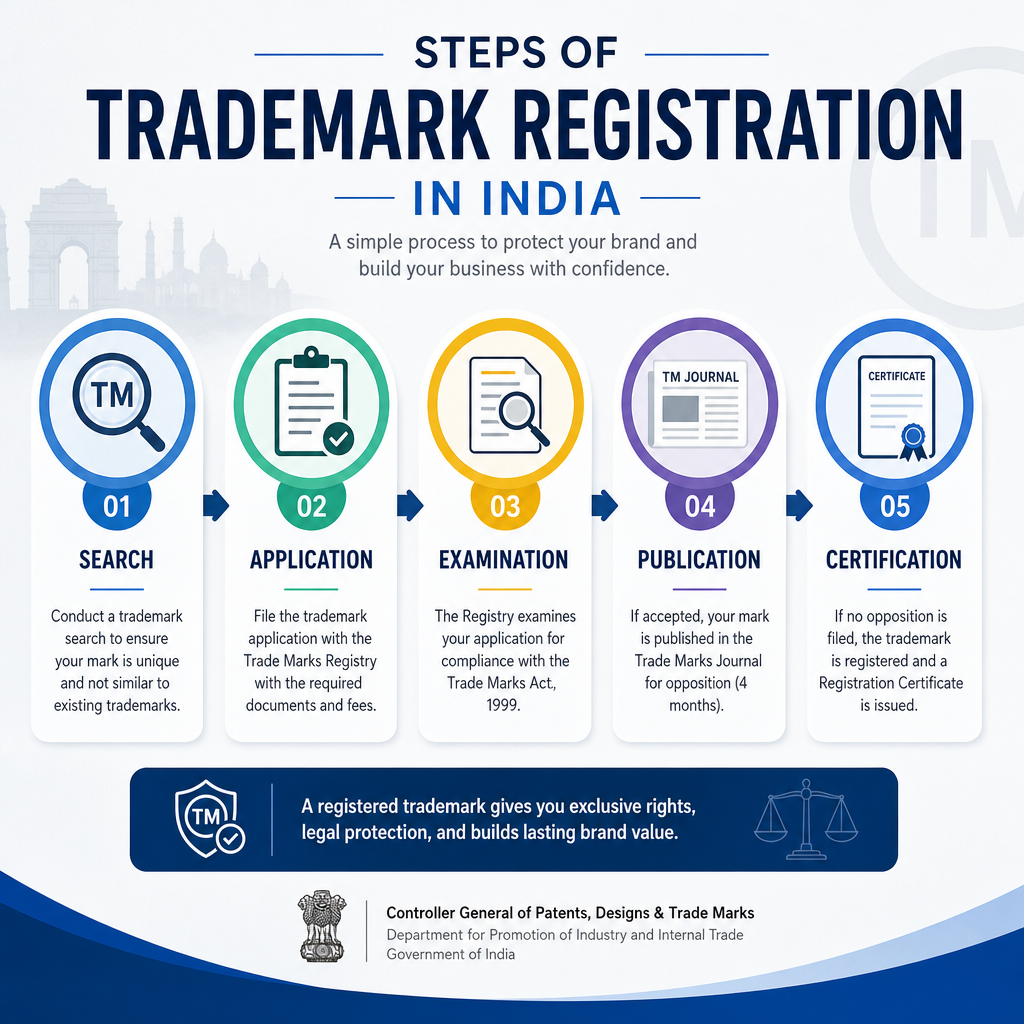
Understanding Trademark Registration in India
Trademark registration in India is a critical step for businesses and entrepreneurs who wish to protect their brand identity. A trademark is a recognizable sign, design, or expression that distinguishes products or services of a particular source from those of others. In India, trademarks are governed by the Trade Marks Act, 1999, and they provide legal protection against unauthorized use that could potentially damage the brand's reputation.
Trademark registration not only helps in protecting the brand but also adds value to the business by creating an intangible asset. It provides you with the exclusive right to use the trademark and prevents others from using a similar mark that could confuse consumers. This guide will take you through the comprehensive steps to register a trademark in India, explore associated costs, outline timelines, and provide tips to avoid common rejections.
For Indian businesses aiming to expand globally, securing a trademark is a strategic move that enhances brand recognition and safeguards against infringement. By understanding the intricacies of the trademark registration process, businesses can make informed decisions that align with their long-term goals. As you proceed, keep in mind that trademark registration can be a complex process requiring meticulous attention to detail, so professional assistance from [IPR Karo](https://www.iprkaro.com/) can be invaluable.
The Importance of Trademark Registration
Registering a trademark in India holds immense importance for various reasons. Foremost, it provides legal protection against infringement. A registered trademark makes it easier to initiate legal proceedings against parties who use it without permission. Moreover, in a market teeming with competitors, a trademark sets your brand apart, reinforcing its uniqueness in the eyes of consumers.
Another aspect of trademark registration is its role in brand value enhancement. A trademark can become a significant business asset that adds to the company's valuation. It builds consumer trust and loyalty, factors that are essential for long-term business sustainability. Essentially, trademarks are not just about legal protection; they are about securing a competitive advantage.
Furthermore, a registered trademark grants the owner the exclusive right to use it for the goods or services for which it is registered. This exclusivity is crucial in maintaining the brand's identity and ensures that competitors do not dilute or exploit the brand name. The proprietary rights also allow for licensing opportunities, enabling businesses to expand through franchising.
In the digital age, where brand visibility is vital, trademarks play a pivotal role in marketing and advertising. They allow brands to be readily distinguishable in both local and international markets, aiding in brand recognition. For entrepreneurs and startups, a registered trademark can be a significant milestone, signifying the official birth of a brand.
The Legal Framework for Trademark Registration in India
The trademark registration process in India is governed by the Trade Marks Act, 1999, which was enacted to modernize the law relating to trademarks and to provide for registration, protection, and prevention of fraudulent marks. The Act is comprehensive and addresses various aspects of trademark law, including the procedure for registration, infringement, penalties, and appeals.
The Trade Marks Act, 1999, empowers the Controller General of Patents, Designs, and Trademarks to administer the registration process. It lays down the criteria for what constitutes a trademark and what can be registered. A trademark can include words, names, symbols, logos, or a combination thereof that are used to identify and differentiate goods or services.
The Act also specifies certain grounds on which a trademark may be refused registration. These include marks that are devoid of any distinctive character, marks that exclusively consist of signs or indications that may serve in trade to designate the kind, quality, quantity, intended purpose, values, geographical origin, or time of production of the goods or of rendering of the services, among others.
Moreover, the Act provides for the registration of collective marks, certification trademarks, and well-known trademarks. It emphasizes the importance of registering a trademark to secure its protection and to provide legal remedies in case of disputes. The comprehensive nature of the Trade Marks Act ensures that businesses can protect their intellectual property effectively and efficiently.
Steps to Register a Trademark in India
Step 1: Trademark Search
Before filing a trademark application, it is imperative to conduct a trademark search. This search helps to ensure that the trademark you intend to register is unique and not already in use. Conducting a trademark search reduces the likelihood of facing objections or opposition at later stages. The search can be done through the online database of the Controller General of Patents, Designs, and Trademarks.
By conducting a trademark search, businesses can identify any similar trademarks that may pose a conflict. A thorough search involves checking for phonetically similar names, transliterations, and previous registrations. This step is crucial in avoiding potential infringement issues and ensuring that the trademark is distinctive.
Trademark searches are categorized into two types: identical trademark search and similar trademark search. The identical search identifies exact matches, while the similar search identifies trademarks that are phonetically or visually similar but not identical. Engaging a professional service like [IPR Karo](https://www.iprkaro.com/our-services/trademark-registration) can streamline this process and provide a comprehensive analysis of potential risks.
Once the trademark search is complete, businesses can proceed with confidence, knowing that their chosen trademark is not already registered or likely to be opposed. A successful trademark search is a foundation upon which the entire registration process is built, and skipping this step could result in complications.
Step 2: Filing the Trademark Application
Once the trademark search is conducted, the next step is to file the trademark application. The application involves submitting Form TM-A, which can be filed either online through the official IP India website or physically at the respective Trademark Registrar office. The application must include the applicant's name, trademark logo, class of goods or services, and a description of the goods or services.
The trademark application requires careful drafting, particularly the description of goods or services. The description must accurately reflect the nature of the business and cover all potential use cases to ensure comprehensive protection. It is advisable to seek professional assistance to avoid errors that could lead to rejections.
Additionally, the application must specify the class under which the trademark is sought. The Indian trademark system follows the NICE Classification system, which categorizes goods and services into 45 classes. Selecting the correct class is crucial for protecting the trademark in the relevant industry sector.
Once the application is submitted, the Trademark Registrar will assign a trademark application number, which can be used to track the status of the application. Filing the trademark application correctly is a critical step that paves the way for securing trademark rights.
Step 3: Examination of the Trademark Application
Following the submission of the trademark application, the Trademark Registrar examines the application for compliance with the legal requirements of the Trade Marks Act, 1999. The examination process includes assessing the distinctiveness, the potential for causing confusion, and any conflict with existing trademarks.
During the examination, the Registrar may raise objections if the trademark is deemed non-distinctive or similar to existing trademarks. These objections are communicated to the applicant via an Examination Report. It is crucial to address these objections promptly and adequately by filing a written response.
The response to the Examination Report must provide justifications and evidence to demonstrate the distinctiveness of the trademark. This may include providing examples of how the trademark is used in commerce or offering evidence of acquired distinctiveness through extensive use.
Engaging a legal expert to draft the response can significantly increase the chances of overcoming objections. A well-prepared response can persuade the Registrar to approve the application, facilitating the progress to the next stage of the registration process.
Step 4: Publication in the Trademark Journal
Once the Registrar is satisfied with the trademark application and any objections have been resolved, the trademark is published in the Trademark Journal. Publication is a public notice that provides an opportunity for third parties to oppose the trademark registration if they believe it infringes on their existing rights.
The publication period lasts for four months, during which any person can file an opposition to the trademark registration. Common grounds for opposition include the similarity of the trademark to an existing one, lack of distinctiveness, or prior rights over the mark.
If an opposition is filed, the applicant must respond with a counter-statement, after which the matter is adjudicated through a hearing before the Registrar. The decision of the Registrar can be appealed to the Intellectual Property Appellate Board.
If no opposition is filed within the stipulated period, or if the opposition is resolved in favor of the applicant, the trademark proceeds to registration. Publication is a critical step that ensures transparency in the registration process and provides an opportunity for interested parties to voice their concerns.
Step 5: Trademark Registration Certificate
After the successful completion of the publication period without any opposition, or after resolving any opposition in favor of the applicant, the Registrar issues a Trademark Registration Certificate. This certificate signifies the official recognition of the trademark, granting the owner exclusive rights to use it for the registered goods or services.
The registration certificate is valid for ten years from the date of application, after which it can be renewed indefinitely for successive ten-year periods. Renewal is essential to maintain the trademark's protection and prevent it from lapsing.
The issuance of the registration certificate is a significant milestone for a brand, as it legally empowers the owner with enforcement rights against infringements. The certificate serves as prima facie evidence in legal proceedings, establishing the validity of the trademark and the owner's exclusive rights.
Upon receiving the registration certificate, businesses can leverage their trademark to enhance brand value, initiate licensing agreements, and explore expansion opportunities. It is advisable to monitor the market for potential infringements actively and take prompt action to enforce trademark rights.
Costs Involved in Trademark Registration
The cost of trademark registration in India varies depending on several factors, including the nature of the applicant, the number of classes, and professional fees. Understanding these costs is crucial for businesses to budget effectively and ensure the process is financially viable.
The official fees for filing a trademark application are determined by the applicant type. For an individual, startup, or small enterprise, the cost is ₹4,500 per application per class, whereas for others, it is ₹9,000 per application per class if filed online. Physical filings incur an additional fee.
In addition to official fees, applicants may incur professional fees if they engage the services of a trademark attorney or agency. Professional fees vary depending on the complexity of the application and the services provided, such as conducting a trademark search, filing responses to objections, and handling oppositions.
Businesses should also consider potential costs related to opposition proceedings, which may arise if the trademark is contested. Legal representation in such proceedings can add to the overall costs of registration.
While the costs may seem substantial, the investment in trademark registration pays dividends in the form of brand protection, legal rights, and potential revenue from licensing. Consulting with experts like [IPR Karo](https://www.iprkaro.com/contact-us) can help businesses understand and navigate these costs effectively.
Estimated Timeline for Trademark Registration
The timeline for trademark registration in India can vary significantly based on factors such as objections, oppositions, and administrative processing times. On average, the process can take anywhere from 12 to 18 months to complete.
The trademark search, which is the first step, can be completed relatively quickly, usually within a few days. However, filing the application and receiving the examination report can take several weeks to a few months.
If the Registrar raises objections, the timeline may be extended as the applicant prepares and submits a response. The examination and resolution of objections can take additional months, depending on the complexity of the issues.
Publication in the Trademark Journal and the subsequent opposition period lasts for four months. If no opposition is filed, the registration certificate is usually issued within a few weeks. However, if an opposition is filed, the timeline is extended further to accommodate the hearing and resolution process.
While the timeline can be unpredictable, proactive management of each stage, timely responses to objections, and effective handling of oppositions can expedite the process. Engaging professionals from [IPR Karo](https://www.iprkaro.com/about-us) ensures that timelines are monitored closely, reducing delays.
Common Reasons for Trademark Rejection
Trademark applications can be rejected for a variety of reasons, many of which are preventable with careful planning and execution. Understanding these reasons can help applicants avoid common pitfalls and improve the chances of successful registration.
One of the most common reasons for rejection is lack of distinctiveness. Trademarks that are generic, descriptive, or common terms that do not distinguish the goods or services from others are likely to be rejected. It is crucial to select a unique and imaginative trademark that stands out in the market.
Another reason for rejection is similarity to existing trademarks. Trademarks that are phonetically, visually, or conceptually similar to registered marks can be refused due to the likelihood of confusion among consumers. Conducting a comprehensive trademark search mitigates this risk.
Incorrect classification of goods or services can also lead to rejection. The trademark application must specify the correct class in accordance with the NICE Classification. Errors in classification can prevent the trademark from being registered for the intended goods or services.
Failure to respond to objections raised in the Examination Report is another common cause of rejection. Applicants must address objections promptly, providing detailed explanations and evidence to support their claims. Engaging experts from [IPR Karo](https://www.iprkaro.com/our-services) ensures that responses are well-prepared and compelling.
Tips to Avoid Trademark Rejections
Avoiding trademark rejections requires a proactive approach and attention to detail at each step of the registration process. Here are some essential tips to increase the likelihood of a successful trademark application.
First, invest time in developing a distinctive trademark. A unique and creative trademark is less likely to face objections or oppositions. Consider using coined words, distinctive logos, or unusual combinations of elements that stand out in the marketplace.
Second, conduct a thorough trademark search using the official database to identify any potential conflicts. Pay attention to phonetic and visual similarities, as well as variations that could cause confusion. A comprehensive search is a critical foundation for a successful application.
Third, ensure that the application is complete and accurate. Double-check the details, including the applicant's name, trademark logo, and class specification. Any errors or omissions can lead to delays or rejections.
Fourth, be prepared to respond to objections promptly and with appropriate documentation. A well-drafted response that addresses the Registrar's concerns effectively can overcome objections and move the application forward.
Finally, consider engaging a trademark professional or legal expert from [IPR Karo](https://www.iprkaro.com/resources) to guide you through the process. Their expertise and experience can be instrumental in navigating complex issues, reducing the risk of rejections and ensuring a smooth registration journey.
Securing International Trademark Protection
For businesses with global aspirations, securing international trademark protection is a strategic decision that extends beyond the Indian market. While registering a trademark in India provides protection within the country, international registration is essential for safeguarding the brand in overseas markets.
India is a member of the Madrid Protocol, an international treaty that facilitates trademark registration in multiple countries through a single application. By filing an international application through the Madrid Protocol, businesses can extend their trademark protection to over 100 member countries, simplifying the process and reducing costs.
The international registration process involves designating the countries where protection is sought, complying with the local laws of each jurisdiction, and paying the requisite fees. The application is submitted to the World Intellectual Property Organization (WIPO) through the Indian Trademark Office.
While the Madrid Protocol offers a streamlined approach, businesses must still navigate individual country requirements and potential objections. Engaging experienced professionals who understand the nuances of international trademark law can be invaluable in ensuring a successful application.
For businesses planning to expand internationally, an integrated strategy that considers both domestic and international trademark registrations is crucial. Consulting with trademark experts from [IPR Karo](https://www.iprkaro.com/contact-us) can provide tailored guidance, ensuring that your brand is protected across all target markets.
Conclusion
Trademark registration in India is a multifaceted process that requires careful planning, attention to detail, and a thorough understanding of legal requirements. By methodically following each step, from conducting a trademark search to securing the final registration certificate, businesses can protect their brand identity effectively.
Understanding the costs involved, the timeline for registration, and potential challenges can help businesses prepare adequately and avoid common pitfalls. By leveraging professional services, such as those offered by [IPR Karo](https://www.iprkaro.com/), businesses can navigate the complexities of trademark registration with confidence.
A registered trademark is an invaluable asset that not only provides legal protection but also enhances brand value, competitive advantage, and business opportunities. By securing trademark rights, businesses can establish a solid foundation for growth and long-term success, both in India and globally.
As you embark on the trademark registration journey, remember that expert guidance can make a significant difference. Whether you are a startup, an established business, or an entrepreneur with international ambitions, securing your brand through trademark registration is a critical step in safeguarding your future.