Trademark Infringement Notice India 2026: A Comprehensive Guide
In the bustling landscape of Indian business, protecting intellectual property, especially trademarks, is crucial. As we step into 2026, understanding the nuances of a Trademark Infringement Notice in India becomes imperative for businesses and entrepreneurs. With increased competition and the rise of digital commerce, receiving such a notice can be daunting. This guide aims to demystify the process, providing you with actionable insights and legal guidance.
Receiving a trademark infringement notice signifies that your brand might be encroaching on another's intellectual property rights. It is essential to address these notices promptly and appropriately to avoid costly legal battles. This article will explore the intricacies of trademark infringement in India, how to respond effectively to a cease and desist letter, and the legal rights available to you.
Understanding Trademark Infringement Notice India 2026
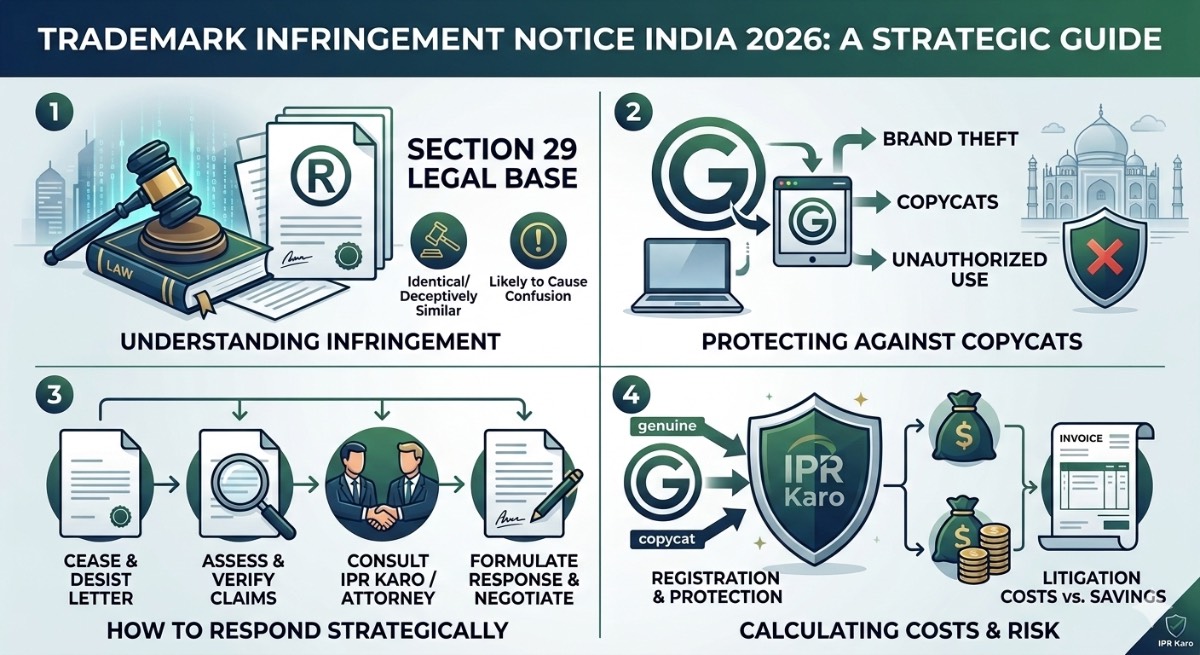
A trademark infringement notice is a formal communication that alerts a business or individual about unauthorized use of a registered trademark. In India, such notices are governed by the Trademark Act of 1999, specifically under Section 29. This section outlines the parameters of infringement and the rights of the trademark owner. Understanding these legal intricacies is vital for any business operating in India.
Section 29 of the Trademark Act: Key Provisions
Section 29 of the Trademark Act delineates the conditions under which a trademark is considered infringed. These include:
Identical or deceptively similar marks are used without consent.
The goods or services in question are similar to those of the registered trademark.
Such use is likely to cause confusion or deception among consumers.
Understanding these provisions helps in assessing whether the notice you received holds legal ground. Consulting legal experts like IPR Karo can provide clarity and direction.
Reasons for Trademark Infringement
Trademark infringement can occur due to several reasons, including but not limited to:
Intentional Copying: Businesses may deliberately use a similar trademark to capitalize on the established brand's reputation.
Unintentional Similarity: Sometimes, businesses inadvertently create marks that resemble existing trademarks, leading to confusion.
Expansion of Goods/Services: Expanding product lines or services without adequate trademark research can result in infringement.
Digital Misuse: The rise of online platforms has increased instances of digital trademark misuse, such as domain squatting.
Case Study: The Landmark Colgate Case
A notable instance of trademark infringement involved Colgate-Palmolive, where a local brand used a deceptively similar name and logo, leading to consumer confusion. The court ruled in favor of Colgate, emphasizing the importance of distinctiveness in trademarks. This case underscores the judicial system's stance on protecting trademark rights and provides a precedent for similar disputes.
How to Respond to a Cease and Desist Notice
Receiving a cease and desist notice can be unsettling. However, knowing how to respond effectively is crucial. Here are steps to consider:
What is a Cease and Desist Notice?
A cease and desist notice is a warning issued by the trademark owner to the alleged infringer, demanding the cessation of the infringing activities. It serves as a preliminary step before pursuing legal action and provides the infringer an opportunity to resolve the matter outside of court.
Step 1: Assess the Notice
First, thoroughly review the notice. Understand the claims made and verify the legitimacy of the trademark. Cross-check with the Trademark Registry to confirm the registration details.
Step 2: Consult a Trademark Attorney
Engage with a qualified trademark attorney to evaluate the strength of the claims. Legal experts can help in drafting a strategic response or negotiating settlements. Contact IPR Karo for expert advice tailored to your situation.
Step 3: Formulate a Response
Prepare a response that addresses each point in the notice. This response should include:
Evidence supporting your case, such as differences in design or target market.
Any prior agreements or permissions.
A request for clarification or additional information if needed.
This stage is critical in preventing escalation to court proceedings.
Step 4: Consider Negotiation or Settlement
Sometimes, a mutually agreeable settlement can be reached without litigation. This might involve altering your branding or entering a licensing agreement. Such negotiations should be guided by legal professionals to ensure fairness and compliance with Indian laws.
Legal Rights Against Copycats and Brand Theft
Protecting your brand from infringement is a proactive process. Understanding your legal rights is essential in safeguarding your intellectual property.
Trademark Registration: Your First Line of Defense
Registering your trademark is the most effective way to protect your brand. This not only provides legal recognition but also strengthens your position in case of disputes. Learn more about the trademark registration process at IPR Karo.
Monitoring and Enforcement
Consistently monitoring the market for potential infringements is crucial. Implementing a trademark watch service can help in early detection of unauthorized use, enabling prompt action.
Legal Recourse: Trademark Litigation Costs India
Should the need arise, taking legal action is a viable option. However, it's important to consider the costs involved in trademark litigation in India. Generally, costs can vary based on factors such as:
Complexity of the case.
Duration of the litigation.
Legal representation fees.
While litigation can be expensive, it serves as a deterrent and upholds your brand's integrity.
Stopping Brand Theft: Practical Tips
Brand theft can significantly damage your business's reputation and financial standing. Here are some practical steps to prevent such occurrences:
Implement Strong Branding Strategies
Ensure your brand is distinctive and easily recognizable. Use unique logos, slogans, and packaging designs that stand out from competitors.
Utilize Digital Tools for Brand Protection
Leverage technology to track and report unauthorized use of your trademarks online. Tools like Google Alerts and social media monitoring can provide real-time updates on potential infringements.
Educate Your Team
Conduct regular training sessions for your team on the importance of brand protection and how to identify potential infringements. This proactive approach helps in maintaining vigilance across your organization.
Official Resources for Trademark Registration and Infringement
For authoritative information on trademark registration and handling infringement cases, the official website of the Controller General of Patents, Designs and Trademarks in India is an invaluable resource. It provides comprehensive guidelines and the latest updates on trademark laws and procedures.
Visit the official government trademark page for more details on registration and infringement processes.
Protecting Your Brand with IPR Karo
In conclusion, handling a trademark infringement notice in India requires a strategic approach, combining legal knowledge with practical tactics. As we navigate the complexities of 2026, businesses must remain vigilant and proactive in protecting their intellectual property.
IPR Karo stands ready to assist you at every step, from understanding your rights to taking effective action against infringements. Our expert team offers comprehensive services tailored to your needs, ensuring your brand remains protected and your business thrives.
For further assistance, contact us today and safeguard your brand's future.
