
Written by Rahul Roy
Trademark Research Specialist
Overview: The AYUSH Trademark Ecosystem in India
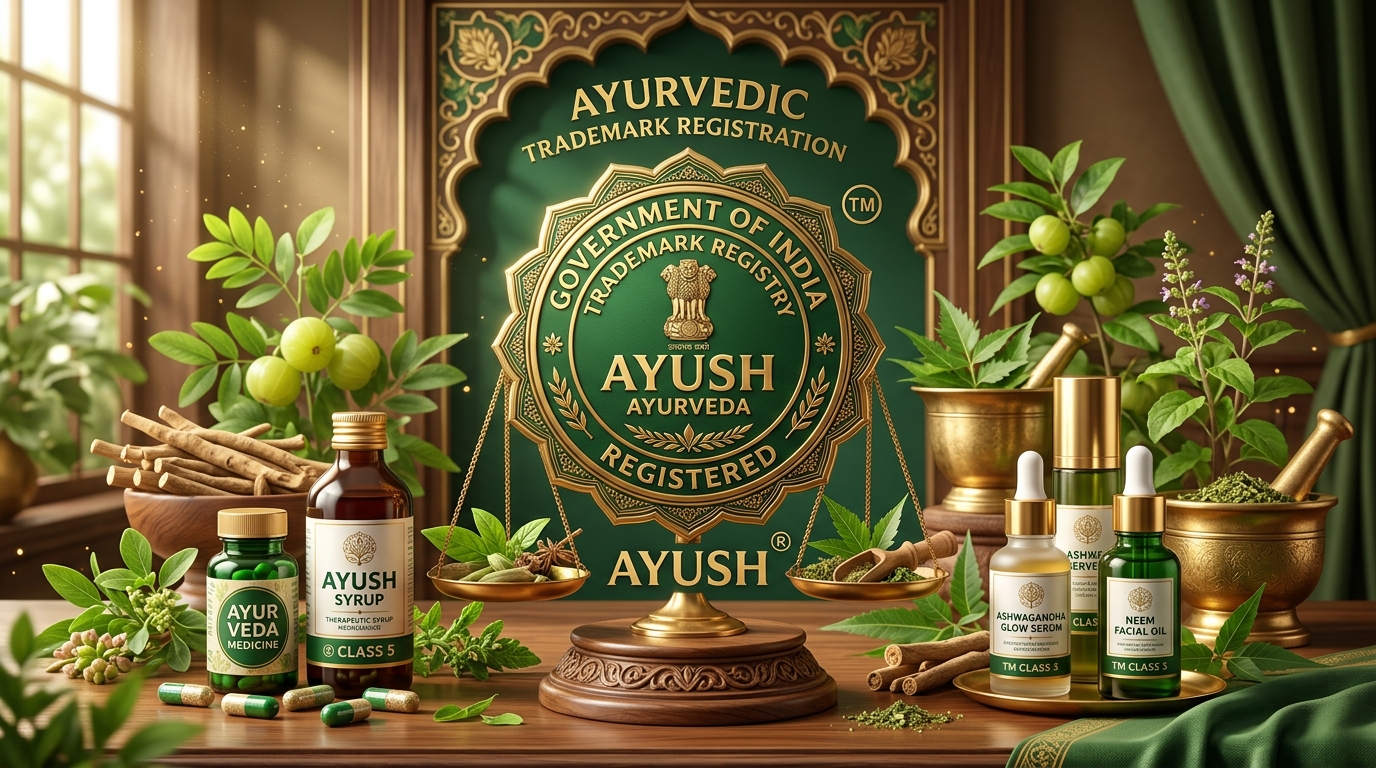
In India, registering an Ayurvedic or AYUSH brand trademark requires navigating a critical distinction between Nice Class 3 (non-medicated herbal cosmetics, skincare, essential oils, and beauty products) and Nice Class 5 (Ayurvedic medicines, therapeutic formulations, curative balms, and herbal supplements). Under Section 9(1)(b) of the Trade Marks Act, 1999, applicants cannot monopolize generic Sanskrit herb names (e.g., Ashwagandha, Neem, Brahmi) or classical Shastric recipes documented in the Traditional Knowledge Digital Library (TKDL). Effective brand protection requires coining distinctive composite marks, harmonizing state AYUSH manufacturing licenses with trademark user affidavits, and executing multi-class filings across Classes 3, 5, 30, 32, and 44.
The Indian wellness and holistic healthcare market has witnessed exponential expansion, driven by the Ministry of AYUSH (Ayurveda, Yoga & Naturopathy, Unani, Siddha, and Homoeopathy) and the surge in Direct-to-Consumer (D2C) organic brands. From botanical skincare serums to classical Kwaths and proprietary immunity boosters, entrepreneurs are building multi-crore enterprises on ancient Ayurvedic foundations.
However, Ayurvedic trademarks encounter unique, formidable hurdles during examination at the Trade Marks Registry. Applicants frequently face intense statutory objections under Section 9(1)(b) for descriptive ingredient names, resistance from the Traditional Knowledge Digital Library (TKDL), and deceptive similarity conflicts under Section 11(1) with established pharmaceutical brands.
Understanding how the Trade Marks Act, 1999 intersects with the Drugs and Cosmetics Act, 1940 and AYUSH licensing regulations is paramount. Discover our related analyses on Section 9 vs Section 11 grounds for trademark refusal and single-class vs multi-class trademark filing strategies.
Regulatory Architecture: AYUSH Ministry & IP Interface
Trademarking an Ayurvedic product in India is not merely an intellectual property exercise; it is tightly coupled with pharmaceutical and regulatory compliance under multiple national statutes:
1. Drugs & Cosmetics Act
Governs Ayurvedic, Siddha, and Unani (ASU) drug manufacturing under Chapter IV-A and Schedule T (Good Manufacturing Practices). Distinguishes classical Shastric drugs from proprietary Ayurvedic medicines.
2. Trade Marks Act, 1999
Classifies goods into Nice Classifications (Class 3 vs Class 5), enforces distinctiveness thresholds (Section 9), and prevents consumer confusion or false medicinal endorsement (Section 11).
3. AYUSH Licensing Rules
State AYUSH authorities approve product labels, composition, and product brand names on Form 25D/26D before commercial manufacture and marketing can lawfully commence.
The statutory classification chosen on your Form TM-A determines not only your trademark scope, but also your vulnerability to regulatory penalties if your marketing claims exceed your registered product category.
The Core Dilemma: Nice Class 3 vs Nice Class 5
The most fundamental decision for every natural wellness founder is whether to file under Class 3 or Class 5. The distinction rests on product formulation, intended purpose, and curative claims:
Nice Class 3: Herbal Cosmetics & Toiletries
Aesthetic, Non-Medicated Care
- Scope: Non-medicated cosmetics, herbal skincare, body lotions, face cleansers, hair nourishment oils, botanical soaps, perfumery, essential oils.
- Primary Claim: Cleansing, beautification, moisturizing, skin conditioning, radiance enhancement.
- Prohibited Claims: Cannot claim to cure medical diseases, treat acne vulgaris clinically, or heal dermatitis.
- Typical Brands: Kama Ayurveda, Forest Essentials, Plum Herbal Skincare.
Nice Class 5: Ayurvedic Medicines & Therapeutics
Curative, Therapeutic & Medicinal
- Scope: Ayurvedic medicines, herbal pharmaceutical preparations, medicated pain relief oils, therapeutic balms, dietetic substances adapted for medical use, herbal capsules.
- Primary Claim: Alleviating symptoms, treating bodily disorders, boosting clinical immunity, pain management.
- Licensing Requirement: Supported by State AYUSH Manufacturing License under Schedule T.
- Typical Brands: Dabur Chyawanprash, Zandu Balm, Himalaya Liv.52, Baidyanath Kwath.
The Dual-Filing Best Practice for D2C Brands
Modern D2C brands frequently blur product boundaries. A brand producing both an Ayurvedic face glow oil (Class 3) and a medicated joint pain oil (Class 5) should file a multi-class trademark application or parallel single-class filings across both Class 3 and Class 5. Registering only under Class 3 leaves the brand unprotected if a competitor launches a Class 5 medicinal product with an identical name.
Comprehensive 5-Class Protection Suite
Modern holistic wellness brands rarely confine themselves to topicals or pills. An omnichannel brand strategy requires trademark filings spanning the following five Nice Classes:
Class 30: Herbal Teas, Spices, Honey & Nutritional Dietetics
Crucial for Ayurvedic green teas, Kadhas, herbal infusions, organic turmeric powders, Chyawanprash food variants, and jaggery-based herbal blends.
Class 32: Ayurvedic Wellness Drinks & Herbal Juices
Protects non-alcoholic wellness beverages, pure Amla juice, Aloe Vera detox drinks, Triphala tonics, and natural botanical energy elixirs.
Class 35: E-Commerce Portals & Ayurvedic Retail Stores
Protects retail store operations, online D2C marketplace sales, pharmaceutical retail distribution, and Ayurvedic franchise networks.
Class 44: Panchakarma Centers, Ayurvedic Clinics & Spas
Mandatory for doctor consultation services, Ayurvedic wellness retreats, Nadi Pariksha clinics, and therapeutic massage centers.
Overcoming Section 9(1)(b) Objections on Sanskrit Botanicals
The single most frequent examination objection faced by herbal brands arises under Section 9(1)(b) of the Trade Marks Act, 1999, which prohibits registration of marks that designate the kind, quality, intended purpose, or botanical composition of goods:
“The trade mark consists exclusively of marks or indications which may serve in trade to designate the kind, quality, quantity, intended purpose, values, geographical origin or other characteristics of the goods...”
1. The Generic Herb Monopolization Trap
You cannot trademark Ashwagandha, Neem Care, Pure Turmeric, Brahmi Rasayana, or Kumkumadi as word marks for Ayurvedic cosmetics or medicines. Because these terms are public domain ingredients in Ayurveda, granting an exclusive monopoly would unfairly restrain lawful trade for other manufacturers.
2. Creating Arbitrary & Coined Composite Marks
Overcome Section 9 by appending arbitrary or fanciful prefixes/suffixes to create a coined composite whole (e.g., combining Veda with an invented stem to yield ‘Vedix’, or combining classical roots into ‘Baidyanath’). Alternatively, register a stylized logo (device mark) with a statutory disclaimer over the generic Sanskrit ingredient name.
3. Establishing Acquired Distinctiveness & Secondary Meaning
Under the proviso to Section 9(1), if a descriptive herbal brand has been continuously utilized for years such that the purchasing public exclusively links the name with your firm (e.g., Zandu or Dabur), the mark qualifies for registration upon submission of rigorous user evidence. Learn how to draft bulletproof affidavits in our guide to trademark user affidavits under Rule 25.
TKDL Scrutiny & Classical Shastric Formulations
The Traditional Knowledge Digital Library (TKDL) is a world-renowned Indian initiative that translates ancient Ayurvedic, Unani, and Siddha texts into 34 million pages across multiple international languages:
Non-Registrable Classical Recipes
Classical ASU medicines specified in authoritative textbooks listed in the First Schedule to the Drugs & Cosmetics Act (e.g., Charaka Samhita, Sushruta Samhita, Bhavaprakasha) are strictly publici juris. Marks such as Maha Bhringraj Oil, Chyawanprash, Triphala Churna, or Sitopaladi cannot be registered as proprietary word marks.
Legitimate Proprietary Formulations
Patent and trademark protection is fully available for Proprietary Ayurvedic Formulations—innovative, novel combinations of botanical extracts with proprietary delivery systems, customized dosages, or branded therapeutic blends (e.g., Himalaya's Liv.52, Dabur's Honitus, or Dr. Vaidya's Herbobuild).
Synergy Between AYUSH Licenses & Trademark User Date
In Indian trademark litigation and opposition proceedings under Section 34 (prior user rights), statutory government licenses provide unassailable documentary evidence:
1. Form 25D Manufacturing License as Prior Use Proof
When your state Ayurvedic licensing authority grants Form 25D (or Form 26D for loan/contract manufacturing), the license officially lists your product trade name and date of approval. Submitting this certified copy in a trademark dispute decisively settles the ‘first-to-use’ priority date over conflicting rivals.
2. Label & Packaging Artwork Alignment
Ensure that the exact logo, font typography, and color combination submitted to the AYUSH State Authority for label approval matches your Form TM-A trademark application. Discrepancies between drug regulatory approvals and registered trademarks weaken infringement injunctions in High Courts.
3. Certificate of Pharmaceutical Product (CoPP) for Global Exports
For Ayurvedic enterprises exporting to the US, EU, UAE, or UK under the WHO-GMP certification scheme, obtaining trademark registration in India enables seamless international filing under the Madrid Protocol. Learn more in our international trademark registration guide.
Deceptive Similarity: The Landmark Amritdhara Precedent
The legal benchmark governing deceptive similarity in Ayurvedic medicines was established in the historic Supreme Court ruling Amritdhara Pharmacy v. Satya Deo Gupta (AIR 1963 SC 449):
“The question has to be approached from the point of view of an ordinary purchaser of average intelligence and imperfect recollection. To such a man, the overall phonetic and structural similarity between ‘Amritdhara’ and ‘Lakshmandhara’ would cause confusion in the marketplace.”
Imperfect Memory Standard
Ayurvedic remedies are purchased by rural and town consumers who do not place products side by side. They recall only the central phonetic cadence (e.g., ‘Dhara’ or ‘Veda’).
Heightened Health Scrutiny
Courts apply stringent phonetic comparison for medicinal preparations because ingestion errors can compromise health, following the Supreme Court's Cadila doctrine.
Trade Channel Overlap
Both Class 3 herbal cosmetics and Class 5 Ayurvedic medicines share identical distribution channels: neighborhood pharmacies, wellness stores, and online e-commerce shelves.
Ayurvedic & AYUSH Product Classification Matrix
The table below outlines the precise trademark classes, acceptable product descriptions, and regulatory frameworks across the Ayurvedic product spectrum:
| Product Category | Nice Class | Statutory Specification | Governing Regulatory Law |
|---|---|---|---|
| Herbal Face Creams, Serums & Cleansers | Class 3 | Non-medicated cosmetics, skincare preparations, herbal face wash | Cosmetic Rules / BIS Standards |
| Therapeutic Pain Balms & Joint Oils | Class 5 | Ayurvedic medicinal oils, medicated liniments, pain relief balms | AYUSH Schedule T / Form 25D |
| Ayurvedic Capsules, Kwaths & Tablets | Class 5 | Ayurvedic medicines, botanical herbal extracts for therapeutic use | Drugs & Cosmetics Act (ASU) |
| Herbal Teas, Kadhas & Spice Blends | Class 30 | Herbal tea infusions, spices, organic turmeric, health foods | FSSAI / Food Safety Standards |
| Aloe Vera & Amla Wellness Juices | Class 32 | Non-alcoholic herbal beverages, botanical juices, wellness drinks | FSSAI (Nutraceuticals) |
| Panchakarma & Ayurvedic Spas | Class 44 | Ayurvedic healthcare therapy, holistic wellness clinic services | Clinical Establishments Act |
Step-by-Step Trademark Roadmap for D2C Brands
Executing a flawless trademark prosecution process ensures guaranteed brand ownership and shields your enterprise from expensive rebranding litigation:
Comprehensive Trademark & TKDL Clearance Search
Conduct phonetic, visual, and conceptual clearance across Classes 3, 5, 30, 32, and 44 on the official IP India registry. Screen classical Ayurvedic databases to verify that the proposed name does not clash with public domain formulations.
Crafting Distinctive Composite Brand Architecture
If your name contains an Ayurvedic root word (e.g., ‘Amrut’ or ‘Veda’), combine it with an invented suffix, proprietary stylized font, and unique logo device mark. This ensures distinctiveness under Section 9.
Harmonizing User Date Affidavit with AYUSH Licenses
If filing on a ‘claimed prior use’ basis, execute a sworn User Affidavit under Rule 25 accompanied by your initial AYUSH Form 25D license, tax invoices, and lab test reports to lock in legal priority.
Responding to Examination Reports & Overcoming Objections
Draft authoritative legal replies to Section 9 descriptive citations and Section 11 pharma conflicts within the statutory 30-day window, invoking landmark precedents and submitting commercial evidence.
Journal Publication, Registration & E-Commerce Enrolment
Following 4 months in the Trade Marks Journal without opposition, receive your official registration certificate. Immediately enroll in Amazon Brand Registry and Flipkart Brand Approval to stop counterfeit herbal sellers.
Frequently Asked Questions
Q.Should my Ayurvedic skincare brand file under Class 3 or Class 5 in India?
The classification depends entirely on the product's primary intended use, therapeutic claims, and regulatory license. If your product is intended for daily cosmetic enhancement, cleansing, moisturizing, or beautification without curative medicinal claims (e.g., herbal face wash, kumkumadi glow oil, aloe vera gel), it belongs in Class 3. If the product claims curative, therapeutic, antiseptic, or medical treatment properties (e.g., anti-fungal neem ointments, medicated pain relief balms, eczema treatments) or holds an AYUSH manufacturing license under Schedule T, it must be registered in Class 5. D2C wellness brands frequently execute dual-filing across both Class 3 and Class 5 to prevent cross-category brand dilution.
Q.Can I register a trademark consisting of a traditional Sanskrit herb name like Ashwagandha, Neem, or Triphala?
No, you cannot obtain exclusive trademark rights over generic Sanskrit herb names, botanical ingredients, or traditional Ayurvedic formulations in isolation under Section 9(1)(b) of the Trade Marks Act, 1999. These terms are descriptive of the product's composition and character (publici juris). However, you can register a distinctive composite mark combining the botanical element with an arbitrary coined word, distinctive prefix/suffix, unique visual logo, or proprietary stylized typography (e.g., 'VedAshwa' or 'NeemVeda' alongside a stylized emblem).
Q.How does the Traditional Knowledge Digital Library (TKDL) affect Ayurvedic trademark applications?
The Traditional Knowledge Digital Library (TKDL) is a database documenting ancient Indian medicine systems (Ayurveda, Unani, Siddha, and Yoga). Trademark examiners and third-party challengers cross-reference TKDL to prevent private appropriation or monopolization of public-domain formulations, classical Shastric recipes (e.g., Chyawanprash, Brahmi Vati), and ancient medicinal methods. Attempting to register a pure classical preparation name as a word mark will lead to absolute rejection under Section 9.
Q.What evidence is needed to prove acquired distinctiveness for an Ayurvedic brand under Section 9 proviso?
To overcome descriptive objections under the proviso to Section 9(1), applicants must file a comprehensive User Affidavit under Rule 25 accompanied by documentary evidence: (1) AYUSH manufacturing licenses displaying continuous historical usage, (2) audited annual turnover and chartered accountant revenue certificates, (3) chronologically arranged GST tax invoices across multiple Indian states, (4) marketing expenditure bills and media clippings, and (5) customer testimonials and online marketplace product listings demonstrating that consumers associate the name exclusively with your enterprise.
Q.What other trademark classes are essential for an expanding Ayurvedic & AYUSH enterprise?
Beyond Class 3 (Cosmetics) and Class 5 (Medicines & Nutraceuticals), comprehensive protection requires: Class 30 (Herbal teas, spices, organic dietetic foods, honey), Class 32 (Ayurvedic health beverages, amla/aloe herbal juices, non-alcoholic wellness drinks), Class 35 (Retail storefronts, e-commerce portals, D2C distribution services), and Class 44 (Ayurvedic healthcare centers, Panchakarma wellness spas, holistic therapy clinics, and doctor consultation services).
Q.How does an AYUSH manufacturing license support trademark registration in India?
An AYUSH manufacturing license (Form 25D for Ayurvedic medicines or Form 26D for loan licenses) issued by the State Licensing Authority serves as indisputable, government-verified proof of commercial adoption and prior user date under Section 34 of the Trade Marks Act, 1999. It validates that the brand was legally commercialized on a specific date, shielding the applicant against prior-user challenges from competitors.
Q.What is the legal significance of the Supreme Court's Amritdhara Pharmacy judgment for herbal brands?
In Amritdhara Pharmacy v. Satya Deo Gupta (AIR 1963 SC 449), the Supreme Court ruled that the Ayurvedic medicine brand 'Lakshmandhara' was deceptively similar to the prior registered mark 'Amritdhara'. The court established that because Ayurvedic medicines are purchased by average town and rural consumers with imperfect recollection, similarities in overall phonetic rhythm and structural suffix ('Dhara') create fatal confusion, setting a strict standard of comparison for herbal pharma marks.
Q.Can an Ayurvedic startup avail government fee concessions for trademark registration?
Yes. Startups recognized by DPIIT (Department for Promotion of Industry and Internal Trade) and enterprises with a valid Udyam MSME Registration Certificate are entitled to a 50% statutory fee discount on official government trademark filing fees (paying ₹4,500 per class instead of the standard ₹9,000 corporate fee) on the IP India e-filing gateway.
Strategic Enforcement Advice for Herbal Enterprises
Building an Ayurvedic legacy requires blending classical wisdom with rigorous modern IP engineering. Choosing between Class 3 and Class 5 is not an afterthought; it dictates your regulatory posture, consumer safety standards, and commercial valuation during venture capital fundraising.
Partner with specialized IP attorneys who understand both the Trade Marks Registry and AYUSH regulatory nuances. For further brand protection strategies, explore our comprehensive guides on how to overcome trademark objections, trade dress & packaging protection in India, and free AI trademark clearance search.
Secure Your Ayurvedic Brand Monopoly
Deploy experienced trademark attorneys to classify your formulations accurately, overcome Section 9 descriptive objections, and defend your brand across India.
Registered Trademark Attorneys • Class 3 vs Class 5 Clearance • AYUSH Licensing Support • 50% MSME Subsidy